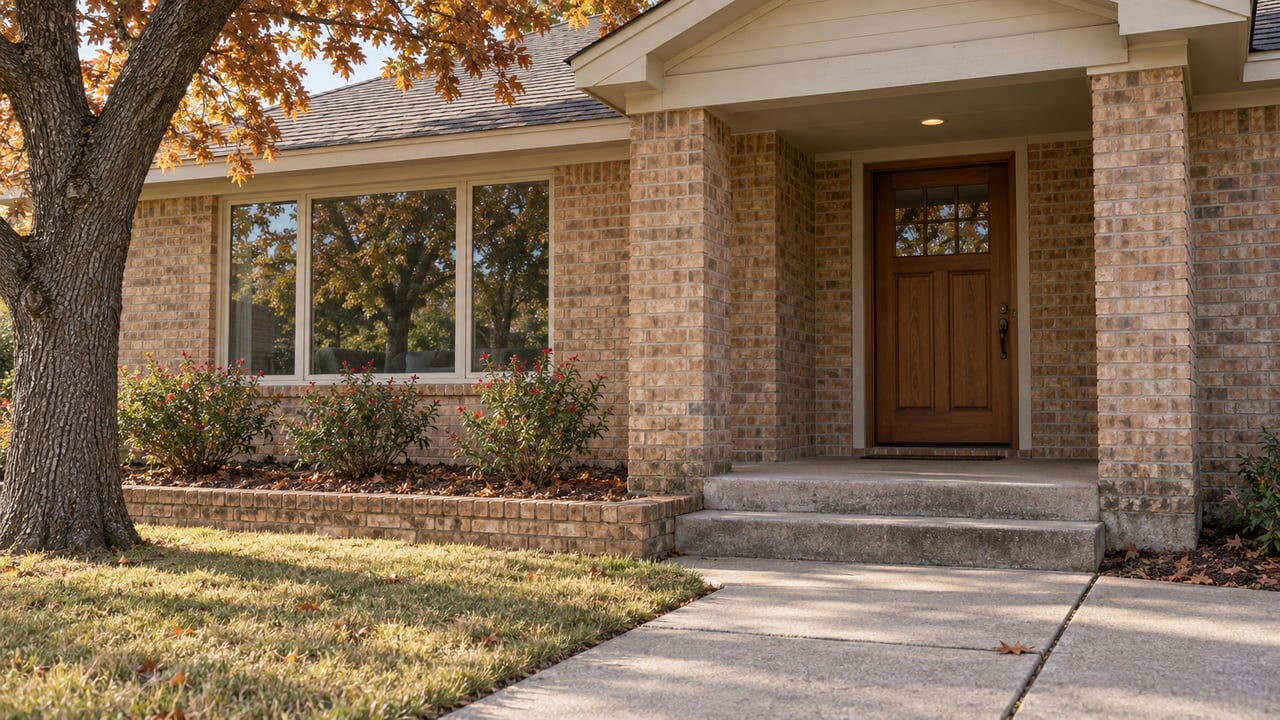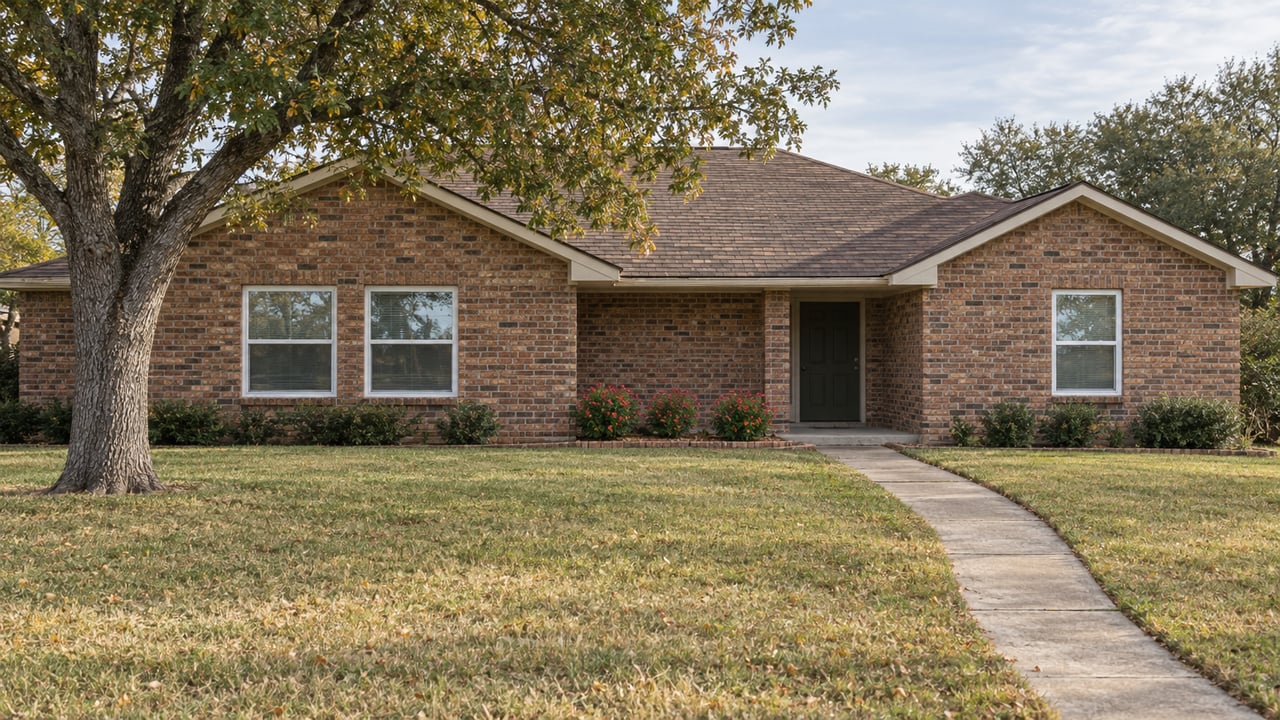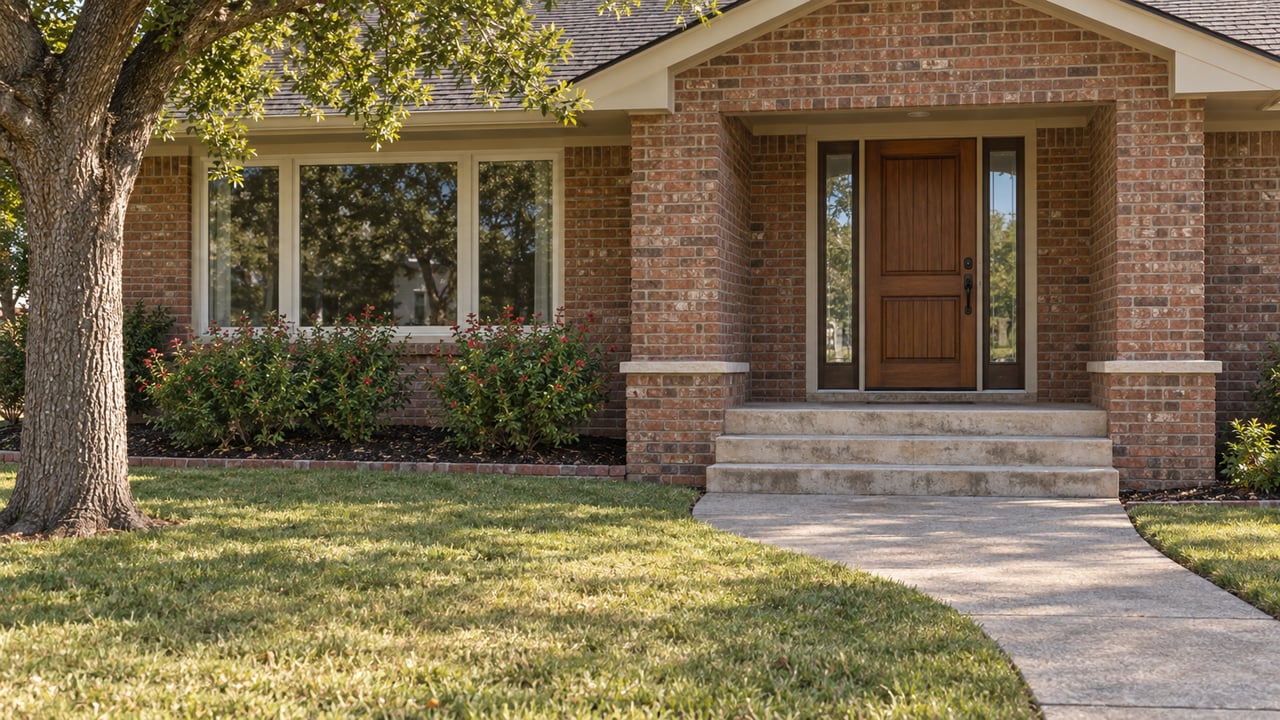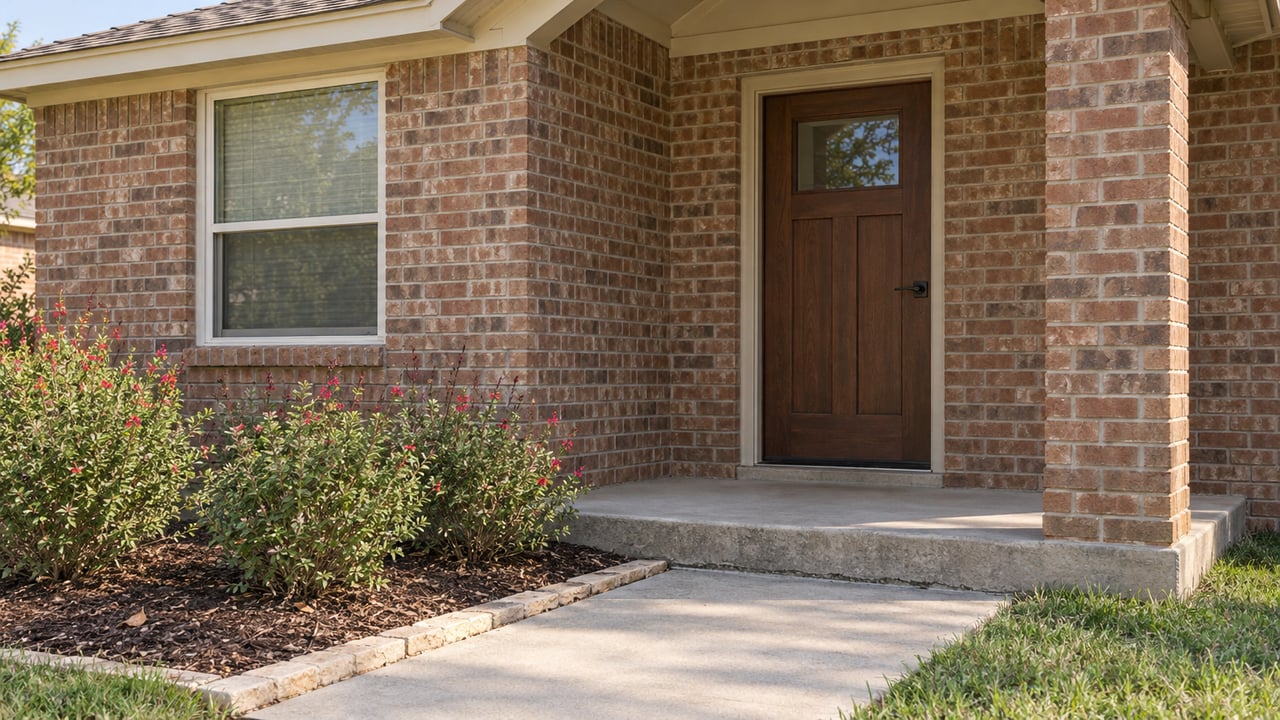
A fall promotion from Trophy Signature Homes, which covers select homes at Dove Hollow in Waxahachie, includes a sample FHA loan on a $370,000 home. Principal and interest come to $1,529.72 a month in year one, $1,732.35 in year two and $1,948.04 from year three through year thirty. That third number matters most. Fannie Mae's Selling Guide says that for fixed-rate loans with a temporary buydown, the borrower qualifies at the note rate, so the lender judges your income against the full payment. VA guidance says the same thing about the payment due once the buydown ends.
A 2/1 buydown lowers your first two years of payments. It does not lower the payment you have to qualify for. With that in mind, the rest of this fall's Ellis County market is easier to read, and it explains why a resale list price and a builder's price are not measuring the same thing.
Rates went up and resale prices held
Here is the Ellis County single-family resale market as the North Texas Real Estate Information System reports it. The Texas Real Estate Research Center at Texas A&M compiles the figures and MetroTex Association of Realtors publishes them.
| Ellis County single-family | Sept. 2025 | Aug. 2026 | Sept. 2026 |
|---|---|---|---|
| Closed sales | 311 | 309 | 284 |
| Median price | $400,000 | $436,250 | $422,450 |
| Days on market | 86 | 77 | 76 |
| Sold-to-list ratio | 93.0% | 94.5% | 94.2% |
| Months of inventory | 4.7 | 4.6 | 4.7 |
Over the same year, borrowing got noticeably more expensive. The Freddie Mac Primary Mortgage Market Survey put the 30-year fixed rate at an average of 7.32% for the week ending October 22, 2026, up from 6.19% a year earlier.
Most people would expect a jump of more than a full point to push resale prices down. In September 2026 that did not happen in Ellis County. The median rose about 5% from September 2025. Homes sold faster, in 76 days instead of 86. Sellers kept a slightly larger share of their asking price, 94.2% compared with 93.0%, and inventory held at 4.7 months. The rate increase shows up in volume instead. Closed sales fell from 311 to 284, a drop of roughly 9%. The homes that sold did not sell at deeper discounts. Fewer homes sold.
The builder sales these figures leave out
The September 2026 report explains why that table only covers part of the market. It uses only listings from the NTREIS MLS, and it says that sales by outside sources such as home builders are not included. New homes appear only when they were sold through the MLS.
So when a buyer in Waxahachie or Midlothian goes straight to a builder's sales office and signs a contract, the county median may never record that sale or whatever incentive came with it. The resale market and the builder market are competing for the same buyers. Only one of them shows up clearly in the monthly figures.
And builders are competing on rate. In Trophy Signature Homes' Fall Signature Sales Event, FHA and VA buyers get a 2/1 buydown at an effective 2.99% in year one, 3.99% in year two and 4.99% after that, plus free appliances. The offer covers select inventory homes contracted by October 30, 2026 and closed by November 30, 2026. Trophy's Waxahachie page lists Dove Hollow homes from $392,990. In Midlothian, Perry Homes is promoting what it calls its strongest incentives of the year at Bridgewater, for designated homes that close by December 31, 2026.
Look at the rate Trophy uses after the buydown ends. It is 4.99%, well below the 7.32% weekly average Freddie Mac reported. The survey average and an FHA promotional rate are different products, so the gap is not a precise comparison. Still, it means the builder is subsidizing more than the first two years.
There is a condition attached. To get the promotion, the buyer has to use Trophy's preferred lender, Green Brick Mortgage, and its preferred title company, Green Brick Title. Buyers can still purchase a home without that lender, but they lose the buydown. So a builder incentive can determine which lender and title company you use.
What the two-year discount is worth
A 2/1 buydown is cash put into an account and used to cover part of each early payment. Freddie Mac's guide limits this structure to starting no more than two points below the note rate and stepping up no more than one point a year for up to two years. The account has to be fully funded when the loan originates. The note itself stays at the full rate, and if the subsidy money runs out, the borrower still owes the full payment.
Freddie Mac requires the lender's file to include a calculation of the buydown's total cost. One simple way to estimate it is to add up the monthly difference between the full payment and the reduced payment. Here is that math on Trophy's published FHA example:
| Period | Monthly P&I | Gap from the year-three payment | 12-month total |
|---|---|---|---|
| Year 1 | $1,529.72 | $418.32 | $5,019.84 |
| Year 2 | $1,732.35 | $215.69 | $2,588.28 |
| Years 3–30 | $1,948.04 | none | none |
That comes to roughly $7,600 in payment relief across two years on a $370,000 home. The figure is arithmetic based on the builder's sample loan. It is not a quote, and the cost on any real loan depends on the lender's terms. Separately, Trophy's 4.99% rate for years three through thirty sits below where market rates stand now, and that portion of the incentive is not part of this $7,600.
A resale seller can offer the same thing, within limits
A resale seller can also fund a buydown. Lenders count it as an interested-party contribution, and each loan program caps those contributions.
- Conventional, Fannie Mae: Under Fannie Mae's interested party contribution rules, for a principal residence, financing concessions are capped at 3% when the loan-to-value ratio is above 90%, 6% between 75.01% and 90%, and 9% at 75% or less. The cap is figured on the lower of the sales price or the appraised value. Seller-funded buydowns count toward it.
- Conventional, Freddie Mac: Section 5501.6 uses the same 3%, 6% and 9% tiers.
- FHA: HUD Handbook 4000.1 allows up to 6% of the sales price, and that cap explicitly includes temporary buydowns.
- VA: VA's temporary buydown page treats a seller-funded buydown as a seller concession and caps concessions at 4% of the home's reasonable value.
Under Fannie Mae's rules, a concession above the cap is treated as a sales concession, and the lender may have to reduce the price or value it uses in the loan math. A seller offering a buydown and closing-cost help together may reach the limit sooner than expected.
Now compare that $7,600 with what resale sellers already give up. With September's 94.2% sold-to-list ratio, a home listed at $450,000 would close around $423,900, about $26,100 below asking. That illustrates the countywide ratio, not any particular sale. A seller is already conceding that money, mostly as a lower price. Moving part of it into a buydown can match a builder's early payments. The trade-off is that a lower price stays lower for the life of the loan, while a buydown ends after year two. VA describes it plainly: after the two-year period, the borrower pays at the note rate.
Comparing a resale home with a builder offer
Put both homes on the same terms before you decide which deal is better.
- Get the payment you qualify at for each home, not just the year-one payment.
- Find out whether the builder's incentive requires its preferred lender and title company, and get a competing quote anyway.
- Ask a resale seller whether some of the expected negotiating room could be put toward a buydown, and have your lender check that it fits your loan program's cap.
- Check the builder's deadlines. Trophy's offer needs a closing by November 30, and Perry's needs one by December 31. A promotion that ends while you are still deciding cannot be counted on.
This post is general information, not legal, financial or lending advice. Loan program rules change and depend on your situation, so confirm the details with your lender before you act on them.
Quick answers
Does a 2/1 buydown help me qualify for a bigger loan? Under Fannie Mae, FHA and VA guidance, no. Approval is based on the full note-rate payment.
Why can't I find builder deals in the county price figures? The NTREIS report leaves out builder sales made outside the MLS. Builder incentives mostly don't show up in it either.
Is the 94.2% sold-to-list ratio a sign that sellers are desperate? In Ellis County, the ratio was slightly higher in September 2026 than in September 2025. The bigger change was in the number of closed sales.
If you are deciding between a builder's buydown and a resale home in Ellis County, or you are a seller wondering whether a buydown would attract more buyers than a price cut, JBRE Group can go through the payment math with you before you sign anything. Schedule a Consultation when you're ready.